
 Founded in 2008, UNIWE works with oil and gas operators, investors, financial institutions, and government energy bodies across South East Asia, Central Asia, North America and global producing regions. Unlike conventional consultants who focus on delivering technical studies, UNIWE approaches every engagement through the lens of a capital allocator, supporting investment committees, lenders, and boards as they decide whether capital should be committed, deferred, restructured, or withdrawn.
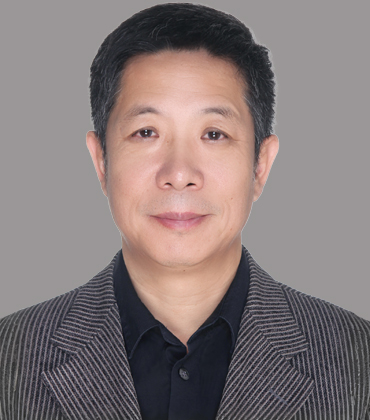
“The core challenge in upstream oil and gas is not finding hydrocarbons,” says Dr. Zhu Jiucheng, President of UNIWE. “It is calculating commercial reserves and making development plans that can survive financial scrutiny, regulatory review, and downside scenarios.”
Our responsibility is to think like operators, investors, and regulators at the same time. Capital flows to projects that work for all stakeholders, not just on paper.
UNIWE’s consulting model is built on integration, but more importantly, on relevance to capital decisions. Geology, reservoir engineering, production planning, and economics are evaluated as an integrated decision system. Every technical assumption is tested against cash flow durability, cost exposure, fiscal terms, and risk-adjusted returns. This approach reflects how banks, funds, and institutional investors assess upstream assets. UNIWE identifies uncertainty in reserve estimation, well performance, and development timing, then quantifies its impact on value, breakeven pricing, and downside protection. The objective is not to present a best-case narrative, but to define a decision envelope investors can trust.
Price volatility remains one of the most persistent external variables in oil and gas economics. UNIWE does not attempt to forecast commodity cycles. Instead, it focuses on controllable levers that materially influence investment outcomes: recovery efficiency, development sequencing, drilling design, and cost structure.
“Price cannot be controlled,” Dr. Zhu notes. “But capital efficiency, technology selection, and development discipline always can.”
To support time-sensitive decisions such as acquisitions, farm-ins, and financing approvals, UNIWE has developed proprietary systems, including Quick-S, Quick-E, and the USOMB material balance simulation platform. These tools enable rapid reserve appraisal, production forecasting, and economic sensitivity analysis under constrained data and timelines. UNIWE also used industry-standard software such as Value Navigator, ensuring alignment with global reserve reporting standards and listing requirements.
Global Basin Experience as a Capital Allocation Advantage
Over the past fifteen years, UNIWE has completed more than 560 technical and commercial consulting projects across nearly every major oil and gas producing region. Its portfolio spans China, Southeast Asia, Central Asia, Russia, the Middle East, Africa, Europe, North America, and South America.
In emerging markets, where subsurface data quality and operating histories are often limited, this comparative perspective is especially valuable. It helps investors understand what has worked elsewhere, what typically fails, and where risk-adjusted expectations should be set before capital is deployed.
UNIWE’s basin familiarity also strengthens its fiscal and commercial advisory work. The firm advises on production-sharing contracts, royalty systems, service contracts, and buy-back structures, ensuring that development plans remain viable under local regulatory and fiscal constraints.
Beyond advisory mandates, UNIWE maintains representative offices and project teams in key regions including Kazakhstan, South East Asia, and North America. This presence supports field-level validation, operational monitoring, and real-time engagement with local stakeholders, reinforcing confidence in both data and execution.
From Analysis to Measurable Value Creation
UNIWE’s work frequently moves beyond reports into decisions that materially alter asset performance. Its recommendations have reshaped development strategies, unlocked value, and improved capital efficiency across multiple regions.
 Between 2024 and 2025, UNIWE conducted a PRMS-compliant reserve assessment for a producing oil field in the Aktau region of Kazakhstan for a Southeast Asia–based listed company. Rather than stopping at certification, UNIWE evaluated alternative development scenarios to enhance returns. Horizontal drilling combined with acid fracturing more than doubled well production rates while maintaining robust economics. Similar outcomes were achieved earlier at Kazakhstan’s Emir Oil field, where UNIWE-supported drilling and stimulation programs increased average daily production from approximately 2,300 barrels to over 5,200 barrels per day and led to the discovery of a new producing structure. These results directly influenced capital reinvestment decisions and field life extension.
In Canada, UNIWE has supported mature assets by optimizing work programs, stabilizing production, and reducing operating costs. These interventions sustained production of approximately 5,000 barrels of oil equivalent per day across assets with estimated 2P reserves of around 50 million barrels.
In China, UNIWE has provided long-term operational support under production operation contracts, including participation in joint management committees, budget preparation, reserve reporting, and performance monitoring. Several of these assets became among the most profitable in their operating regions, demonstrating the impact of continuous, investor-aligned oversight.
UNIWE’s capabilities also extend to pipelines, LNG facilities, gas processing plants, and downstream infrastructure, where feasibility and due diligence assessments support capital commitments for large-scale projects in Africa, Papua New Guinea, and Canada.
Enabling Bankable Transactions and Stakeholder Alignment
UNIWE occupies a distinct position at the intersection of operators, investors, lenders, and governments. Its advisory work underpins acquisitions, divestitures, financings, and public listings where technical credibility must align with disclosure and regulatory standards. The firm is qualified to issue PRMS reserve and Competent Person’s Reports under Hong Kong Exchange listing rules and has supported transactions recognized by major exchanges, accounting firms, and financial institutions. Over the past decade, UNIWE has advised on oil and gas transactions exceeding US$3.25 billion.
A notable example was UNIWE’s role as exclusive technical and valuation advisor to China Development Bank during the acquisition of BP’s Pakistan assets by a Hong Kong–listed company with transaction consideration about 750 million USD. The transaction required rigorous reserve validation, development forecasting, and economic stress-testing. Post-acquisition, the asset achieved sustained production growth and early loan repayment, validating the importance of disciplined pre-transaction analysis.
UNIWE also supports transaction structuring, data room management, technical presentations, negotiation support, and sale and purchase agreement negotiations. Its leadership team brings deep familiarity with listing regulations, supervisory requirements, and cross-border transaction standards.
“Our responsibility is to think like operators, investors, and regulators at the same time,” Dr. Zhu says. “Capital flows to projects that work for all stakeholders, not just on paper.”
Positioning Assets for a Transitioning Energy System
 Energy transition dynamics are reshaping how upstream assets are valued. Price assumptions are tightening, emissions scrutiny is rising, and gas is increasingly viewed as a transition fuel. UNIWE incorporates these realities directly into current asset evaluations.
Carbon intensity, methane emissions exposure, and CCUS readiness are assessed alongside reserves and economics, allowing investors to understand how assets perform under evolving regulatory constraints. Natural gas is central to UNIWE’s forward-looking advisory work, particularly stranded gas fields integrated with Mini LNG and downstream utilization. In Papua New Guinea, UNIWE is supporting the development of gas discoveries that remained undeveloped for more than three decades, enabling fuel substitution, emissions reduction, and improved project economics.
UNIWE also evaluates the integration of solar and wind power into oil and gas operations and explores geothermal potential using existing subsurface infrastructure. These initiatives are framed not as diversification exercises, but as measures to enhance asset resilience and capital longevity.
At the portfolio level, UNIWE advises investors on balancing short-cycle, high-performance assets with longer-term projects aligned to lower-carbon systems. The objective is straightforward: preserve value today while maintaining flexibility for tomorrow.
As energy markets continue to evolve, UNIWE remains anchored to its original mandate; apply technical rigor, commercial realism, and investor discipline to decisions that must hold up long after the slides are closed.
